
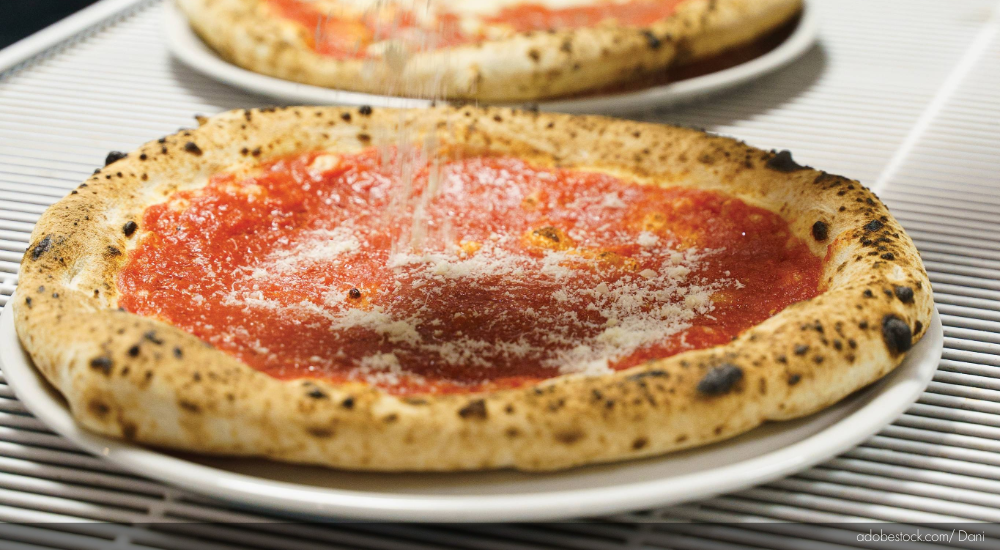
Neapolitan Is the Pizza Movement’s Backbone
There is a beauty to Neapolitan pizza that captivates pizza fans and pizza makers alike.
“I was immediately captivated by the fire in the oven and the speed at which a Neapolitan pizza comes to life,” says Mirko D’Agata, Chef exécutif Pizzéria NO. 900 et MORSO Pizzéria in Montreal, Quebec, Canada. “The movements of the pizzaioli felt like a dance, precise, light, almost instinctive. The technique, the respect for the dough, the kindness of the hands shaping it… all of this drew me in and never let me go.”
D’Agata won the Pizza Napoletana Division at the 2025 International Pizza Challenge during Pizza Expo in Las Vegas.
Neapolitan techniques define the style. “The schiaffo (slap) technique for stretching, the extremely high baking temperature, and the very short cooking time – between 60 and 90 seconds – make the Neapolitan style unique,” he says. “These elements come together to create a pizza that is light, fragrant, and deeply rooted in centuries of craft.”

The Neapolitan Tradition
Even with pizza’s Italian roots most North Americans were not exposed to what authentic Neapolitan pizza was before the early 2000s. Since then, its notoriety has steadily increased. For pizzaioli, it’s the craft. The Neapolitan pizza as we know it today traces back to the 18th century Naples, Italy. Originated as a humble street food, Neapolitan pizza has grown into a worldwide sensation.
The famous Pizza Margherita received its name from a letter from the Italian “Department of the Mouth” on behalf of Queen Margherita on June 11, 1889. The story goes that when King Umberto I visited Naples with Queen Margherita. The queen wasn’t going to a humble pizzeria, so the pizza was brought to the palazzo where the royal couple was staying. The pizza was delivered by Raffaele Esposito, owner of the famous pizzeria Pietro il, and his wife, Donna Rosa, the pizza maker. They made three kinds of pizza, and after sampling all three, Queen Margherita selected as her favorite the pizza made with tomatoes, fresh bufala mozzarella and fresh basil.
Neapolitan Pizza Rules
Traditional Neapolitan pizza carries rules and standards that have been created to protect the authenticity of the style. Though many pizzas are referred to as “Neapolitan-style” pizza, the traditional Pizza Napoletana adheres to strict guidelines. In 1984, Associazione Verace Pizza Napoletana registered the “International Regulations of the True Neapolitan Pizza”. Approved “Verace Pizza Napoletana” follows traditional methods outlined in regulations and enforced by its pizzeria and pizza maker members.
The Assoziazione Pizzaiuoli Napoletani is another certification organization. APN focuses on preserving the pizzaiolo’s art and training individuals.
Organizations and certifications have been formed to protect the definition of the pizza resulting standardized methods in everything from ingredients and products to production and cooking.
Roberto Caporuscio, owner of Kesté Pizza & Vino on New York’s Bleecker Street, has taught over 300 pizza makers and helped open around 90 pizzerias, certifying the art of Neapolitan pizza.
He highlighted the importance of using authentic ingredients like “00” flour, imported Italian tomatoes, and buffalo mozzarella. Caporuscio noted that true Neapolitan pizza requires extensive training.
The Neo-Neapolitan style, as well as other artisan and craft pizzas, were born from Neapolitan, varying the AVPN and APN standards. Caporuscio contends, “it is not Neapolitan. It’s something different. It’s something that can be very good too, but it’s not Neapolitan.”
Where he sees a lot of deviation is when pizza makers try to get a crispier crust. “They say, ‘Oh, Neapolitan pizza is soggy,’” he says. “No, the pizza is not soggy.” That is a misnomer. You won’t find a soggy Neapolitan pizza at Kesté. If the standards and techniques are followed, you will not have soggy issues, he says.
Training for Neapolitan pizza doesn’t happen overnight, Caporuscio says. Even after initial training, it may take a pizza maker more than three month to consistently produce Neapolitan pizza. After that, it’s continual improvements.
“The movements of the pizzaioli felt like a dance, precise, light, almost instinctive. The technique, the respect for the dough, the kindness of the hands shaping it… all of this drew me in and never let me go.”
– Mirko D’Agata, Pizzéria NO. 900 et MORSO Pizzéria in Montreal, Quebec, Canada.
Everything starts with Neapolitan standards. Caporuscio and D’Agata are traditionalists when it comes to following and teaching Neapolitan standards.
“At our school in Montreal, AVPN Canada, I teach the AVPN rules, the techniques, and the ingredients required to create a true Neapolitan pizza,” D’Agata says. “This product has existed since the 1700s, and I believe in preserving its philosophy as it was conceived, while naturally adapting to today’s equipment and technology. Tradition gives us a foundation, and I want to honor it.”
Rules Define Neapolitan Pizza
AVPN has spelled out certification standards in its 29-page “International Regulations of the True Neapolitan Pizza.” Here are a few of the rules to meet their rigorous standards:
- Flour type “00”/ flour type “0” is used.
- Water, yeast, salt is also used to make the dough. (Neapolitan pizza dough does not use oil or sugar.)
- Use a direct dough-making method.
- AVPN indicates, “The final dough must feel moist, non-sticky, soft and plastic and easily removable from the mixer bowl to be worked.”
- Dough should be hand-formed with a “cornice” height of 1-2 cm and a center of the pizza at approximately 0.25-0.30 cm thick after cooking.
- Ingredients are specific: Tomatoes, mozzarella, oil, basil, salt, ricotta and more carry unique properties for use. For instance, peeled San Marzanos tomatoes are from Agro Sarnese-Nocerino and preferably should be crushed by hand.
- Neapolitan pizzas are baked in a wood-burning, double-dome oven at 800-900 F for 60-90 seconds. As technology and local environmental regulations have changed around the world, exemptions may be considered. AVPN regulations state: “The oven powered by alternative energy must correspond to the technical parameters and characteristics relating to the cooking methods.”
There are several other certification requirements that can be found at pizzanapoletana.org/en/.
Margherita and Marinara Neapolitan Pizzas
The two most common Neapolitan pizzas are the Margherita and the Marinara. They are Caporuscio’s favorites for their simplicity. The AVPN margherita features peeled tomato, extra virgin olive oil, Buffalo or cow mozzarella/ fior di latte, fresh basil leaves and optional grated hard cheese.
The marinara is D’Agata’s favorite and it’s the pizza he won the Pizza Napoletana Division with at the International Pizza Challenge. “It’s one of the oldest pizzas and one of the purest: just tomato sauce, garlic shavings, oregano and extra-virgin olive oil,” he says. “Its simplicity leaves no room for mistakes, the sauce must cook just enough, the garlic must lightly fry and release its aroma at the perfect moment. Nothing can hide an error in dough preparation or oven management. For me, it’s the perfect expression of umami. Simple, yes – but perfectly balanced, timeless and honest.”
AVPN outlines other Neapolitan pizzas and menu items, including Traditional Four Seasons, Capricciosa, Ripieno/Calzone and Deep-fried pizza.
Whether you follow the certified standards or draw inspiration from the style, study the Neapolitan way to get a better understanding of the components of a perfect pizza.
Denise Greer is Editor in Chief at Pizza Today.