
Key Points:
- Pesto alla Genovese is the basil-forward sauce typically associated with traditional pesto.
- While the first pesto likely included walnuts, pine nuts are standard in most varieties today.
- Consider using a bit of spinach or butter to avoid oxidation that turns pesto black.
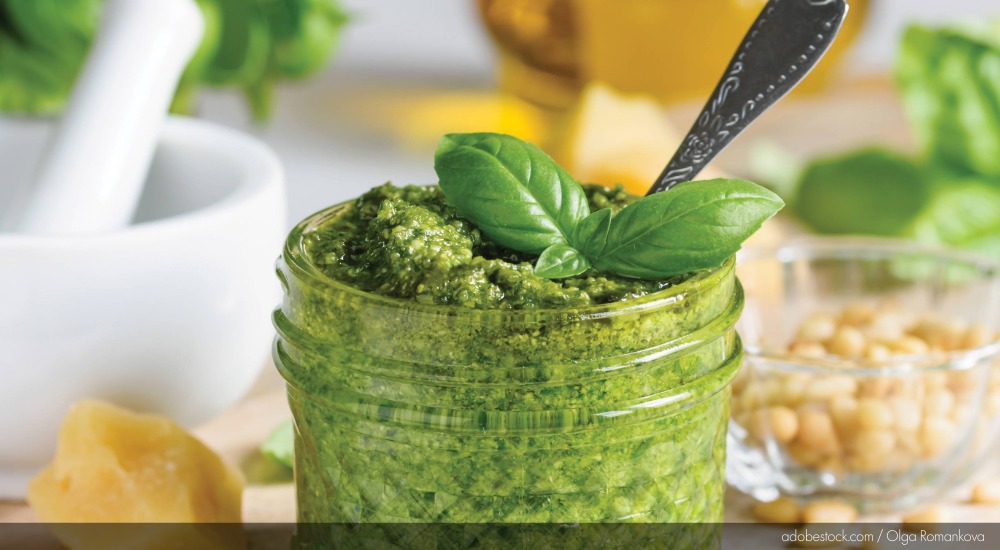
Pesto alla Genovese is one of the best things to come out of the Ligurian Hills. This brilliant green sauce has conquered the world of pizza and pasta with the combination of sea salt, fresh basil, garlic, pine nuts and extra virgin olive oil.
In the Middle Ages, the ancestor of pesto – pounded garlic with salt and olive oil – was considered antiseptic. Cooks would add it to meats and fish as a preservative and sanitizer. After a while, the Ligurians started adding fresh herbs, such as sage, oregano, parsley and marjoram, to this garlic mix. This was like Pesto di Erbe of today.
It is believed that the first pesto sauces contained walnuts, thanks to trading with eastern Muslims. Some western Ligurians use walnuts in their pesto blends to this day. The addition of pignoli (or pine nuts) was a way to incorporate this local food as well as to accommodate the church during religious periods, when animal products were forbidden. Pine nuts created a creaminess that mimicked the cheeses that churchgoers couldn’t use.

Pecorino Sardo initially was used as the lead cheese when making pesto, when Sardinia was a colony of Genoa. But because of its salty, spicy flavor, the more mellow Parmigiano Reggiano surpassed this iconic cheese for use in pesto.
Herb Your Enthusiasm
As with many Italian regional foods, the variations and opinions about how to make the proper pesto float around like clouds in the summer sky. Let’s break down the components and variations that can make (or break) a fantastic Pesto alla Genovese.
Basil: With so many varieties now available, this aspect of a fragrant pesto is most important.
Hydroponic basil is OK when leafy, but its aroma and flavor are lacking. It also grinds to liquid using a marble mortar and pestle.
Genovese basil packs a sweet and pungent flavor. In Liguria, most of the small Genovese basil is grown on hills near the sea. This humidity and soil composition adds special essential oils to the basil, which doesn’t have the astringent, minty aftertaste of other varieties.
Italian large leaf, lettuce leaf and Napolitano mammoth basil varieties are a bit stronger than Genovese, but if you are making large batches of basil, they give you more bang for the buck.
If you are getting basil from a food distributor, snip the ends and place them in water. Then, store basil at room temperature like you would fresh flowers. Always look to see if your basil has been subjected to chemical sprays and insecticides. If you see holes in leaves, that is a good sign your basil hasn’t been sprayed.
Finally, try not to add basil stems to your pesto; they are bitter and watery. Basil is very susceptible to oxidation, which can occur with wilted leaves and too much heat from processing. Store finished pesto in your refrigerator in a tightly sealed container.
Salt: Chunky sea salt is the first ingredient preferred by pesto aficionados. Adding this to the pestle first enables it to be crushed against the basil leaves and creates the coarse pulse not found in blenders or food processors.
Cheese: Parmigiano Reggiano should be aged over two years and grated coarse (not too fine.) Many chefs use different cheeses in pesto, including feta to a delicious outcome.
Pine Nuts: Try to find the freshest pignoli available. Make sure not to use any that have been browned, which will give your pesto a bitter taste.
Extra Virgin Olive Oil: Some fanatics say that great pesto can only come from the fruity and buttery Taggiasca olives grown in Liguria, but there are some great substitutions for these expensive oils. I prefer fresh-packed extra virgin olive oil; its bright, floral notes and full-bodied fruitiness are perfect for my pizzeria.
Leaf Your Worries Behind
The modern age has left its imprint on a lot of traditional Italian foods. This includes pesto, which can be made using food-processing equipment. Some say this burns the pesto and adds metallic flavors, but if you’re concerned about labor costs in your restaurant, you may have to take these shortcuts. Oxidation is the biggest enemy, as it will make your pesto turn black. Here are some secrets to overcoming this.
- Cool the extra virgin olive oil in the refrigerator before adding it.
- Refrigerate the blades and the bowl of your food processor or blender, so they don’t heat up too much.
- Hold back a third of the oil and add it at the end without blending. This coats the already cut basil, preserving the essential oils.
- (The big cheat!) In the many Italian restaurants where I’ve worked, the chefs add some fresh spinach to pesto (while no one is looking), to combat oxidized, blackened pesto.
- (The bigger cheat!) There is an ongoing battle between chefs about the use of a small knob of butter to round off their pesto. I think that would add some lusciousness, but this thought is considered sacrilege at best in Italy.
The Other Pesto
Here are some other “pestos” that have become quite popular in restaurants across the U.S. and Europe.
Artichoke Pesto made with lemon zest, thyme, bay, parsley and shallot. – Deborah Madison
Pesto alla Trapanese with Almond and Tomato pesto. – Rolando Beramendi
“Mondo Bizarro” oil-free tomato-spinach pesto for pasta. – Mollie Katzen
Pesto Invernale is a Sicilian winter pesto with walnuts, onions, tomato, parsley, garlic and hot peppers. – Giuliano Bugialli
JOHN GUTEKANST owns Avalanche Pizza in Athens, Ohio.

Photo by Denise Greer; design by Katie Wilson
Read the July 2026 Issue of Pizza Today Magazine
This issue of Pizza Today magazine is dedicated to the employee experience. From our cover story – “Secrets of the Best Workplaces” – to columnist Nick Bogacz’ first-person account of debuting employee programs, we cover everything from creating employee pay scales to restaurant technology that makes your staff’s lives easier. Plus: We dive into the practice of teaching dough-making, local sourcing and pesto. It’s a delicious issue from start to finish.
Check out the full Digital Edition – Pizza Today July 2026.