

Dough Science Insights from Top Experts
Key Points:
-
- Deeper fermentation techniques, flour blending, ancient grains, and tighter environmental controls are driving a new era of dough quality, consistency, and flavor complexity.
- Technology and automation are strengthening dough precision and efficiency, but skilled human judgment remains the irreplaceable core of great pizza making.
Pizza dough is constantly evolving. What is the future of pizza dough, and what will pizza making at American pizzerias look like? We enlisted some of the brightest minds in the pizza business – experts who study and experiment with pizza dough – to answer those questions. The roundtable discussion includes:
© 2022 Marc Fiorito // Gamma Nine Photography
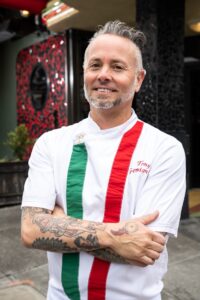
Tony Gemignani
Tony’s Pizza Napolentana, Slice House and more – San Francisco, California
Tony Gemignani is a 13-time world champion pizza maker, acclaimed restaurateur, and co-author of The Pizza Bible. Referred to as the G.O.A.T., he is the founder of Tony’s Pizza Napoletana, Slice House and owner in 40 restaurants. He is widely recognized for his skill, innovation, and influence in the world of pizza.

Will Grant
Sourdough Willy’s – Kingston, Washington
Will Grant, also known as Sourdough Willy, is the world’s top sourdough competitive chef and the first non-Italian Master Pizzaiolo Instructor in the United States. With 40 years of experience growing his family’s pizzeria, he now shares his sourdough expertise through Sourdough Willy’s Pizzeria and the PNW School of Pizza in Washington.
Frank Pinello
Best Pizza – Brooklyn, New York
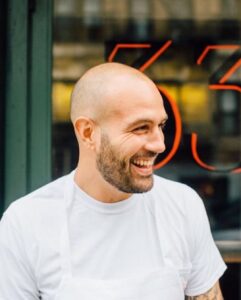
Frank Pinello is a Brooklyn-born pizzaiolo and the founder of Best Pizza in Williamsburg, where he revives classic New York slice-joint tradition with a century-old wood-burning oven and deep Sicilian roots. He is a Culinary Institute of America graduate who is recognized internationally as host of VICE’s The Pizza Show.
Laura Meyer
Pizzeria da Laura — Berkeley, California
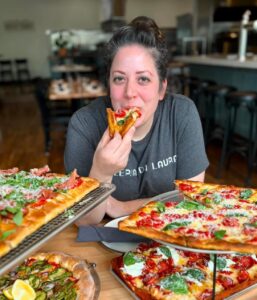
Laura Meyer is a 20-year industry veteran, often referred to as “the pizza queen.” She is a three-time world pizza champion and owner of Pizzeria da Laura in Berkeley, California. She also is a frequent contributor to the Knead to Know pizza dough column in Pizza Today. Laura is a founder of the advocacy non-profit, Fork to Future.
Leo Spizzirri
Moderna Pizzeria — Austin, Texas
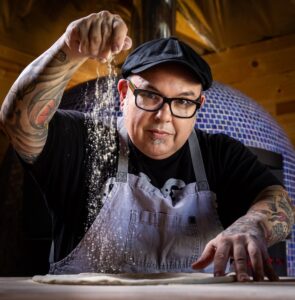
Leo Spizzirri is the master pizzaiolo/executive chef at Moderna Pizzeria in Austin, Texas. Chef Spizzirri is one of only 100 Master Instructors worldwide certified by the Scuola Italiana Pizzaioli, as well as a respected pizza educator known for his expertise in dough, artisan pizza and commercial production.
What does future look like for PIZZERIA DOUGH PREP AREAS?
Tony Gemignani: I have already added reverse osmosis to all my locations out of S.F., so my water is consistent as I am growing across the U.S. You’re seeing more locations switching to different types of mixers, such as moving away from planetary mixers, and switching to spiral mixers with multiple speeds. I have mostly spiral mixers in all my pizzerias now. They’re also seeing a change in both dividers and rounders, which has helped save on labor.
Will Grant: For 35 years, we had 500 square feet. Then we jumped up to 1,300 square feet, and now we’re jumping up to just under 5,000 square feet for this next location. With that, I get something I’ve never had before. … It’s getting an air-controlled dough room, so we can keep all the flour at a reasonable temperature – or at least a standardized temperature – and the room itself at a standardized temperature to make the dough-making process more consistent.
So for me, that means having a holding tank of cold water in my walk in that I can have set up to a water feeder. Having a separate room from where my ovens are, so that way we don’t have to worry about par baking or baking off pizzas at the same time as they’re making dough, because that changes the humidity in the room and the temperature of the room. Having a separate room and having air conditioned is big for me.
As I continue teaching, I really try to emphasize “make do with what you have,” because you only have what you have. The changes they make in the restaurant have to be more recipe- and temperature-wise, so making sure pizzerias have humidity and temperature detectors. That way, they know what the temperature and the humidity is in the room, and making sure that they’re not too hot, not too warm. Or if they are, being able to use the correct calculations to make sure they’re cooling the water enough – if not all the way down to ice water – as they’re making the doughs, and knowing when it’s time to do it and when not to do it.
Frank Pinello: I think that you’ll see two things happen in the industry. I think you’ll see people diving more into the details, like temperature-controlled areas – even if you’re in New York figuring it out.
Using more local flours. Maybe some people even grinding their wheat berries, which we’ve seen a little bit of in the past.
But I also think there’ll be another route, where automation will start becoming (used) much more. The equipment that we use will become better to do little jobs that you never thought a machine could do in the past.
Laura Meyer: I see a lot of pizzerias that view themselves as restaurants as well as pizzerias. You’re looking at independent operators that are more artisanal. WIth the artisanal mindset, they’re seeking out higher quality flours. They’re seeking out smaller productions – and a lot of that tends toward the farm-to-table thought process of using ingredients that are sourced locally.
Nowadays that’s looked at as artisanal, and they view their production a little bit differently.
So you’re looking at more technology. You’re looking at your temperature. All of the AI-type stuff that comes in – and I don’t mean fancy computers and ChatGPT. It’s the people who are formulating temperatures for every batch. They’re cataloging every recipe and every batch, and they’re temping humidity, and they’re temping all the things that “normal” operators aren’t doing.
Then you’ve got the other side of the spectrum. That is, they’re not quite as focused on the artisanal aspect. They’re more focused on the business as a whole and so, the food is an aspect they are balancing. They’re thinking about their business in a different manner in terms of their food cost, their labor, all that kind of stuff.
Leo Spizzirri: I see a lot of the spectrum because they’re not all these giant, massive places with huge budgets. There are a lot of small independents still opening up with 1,400 to 1,500 square feet. The key things I think that are going to be important are two-fold. The first one being, what are the controls? Back in the day, we had a mixer that was sitting practically next to the pizza oven. And flour was always hot because it was never taken care of. So, I think that separating ingredients, having an allocated space that can separate ingredients so things like our flour aren’t sitting at the same temperature as the regular kitchen. Sometimes we have a dry storage space, and we put it off to the back – if you have that kind of luxury to be able to separate it.
However, if you didn’t have that space where you could keep that flour in a cooler spot, things like water controls are another big one. Being able to have, not only a water meter, but even a chiller, right? A dough area that’s going to have water capabilities, capabilities to keep ingredients cold – or, at least, to create a climate that is kind of consistent all year long without the ups and downs. This alleviates the reason to have alternate dough formulas for the summer. We can keep it consistent pretty much through the year. Different kinds of filters and things that are on the market right now so that we can actually get to proper pH, because people are talking more than ever about pH of water.
What are the emerging trends in dough science that pizzeria operators should pay attention to?
Tony Gemignani: Blended grains along with milling your own grain, higher hydrations and extended maturation are always procedures. You see that pizza makers and bakers tend to gear towards always trying to make better dough. You also see a renaissance of lower hydration with high-gluten, high-protein, flours blended with low-protein flours, while cooking at a high heat in an electric oven. This has also taken a turn in the pizza world, or typically you were always trying to get a higher hydration, but now some are going the opposite.
Will Grant: Everything that’s old is new. It’s the oldest way in the world to make risen breads, leavened breads, through a preferment. So humans are getting back to the core of who we are and how we did this millions of years ago, before there was refrigeration, before there were thermostats for ovens.
Frank Pinello: I think the preferment is big. My guess is that when L’industrie started getting really popular, people started really paying attention to what they were doing, and I think they helped that movement toward the preferment, whether it’s a biga or the poolish, which is a lot of water. Some of those things that you’ve seen in high-level baking, I think we’re starting to adapt a lot of those techniques.
You’re also starting to see people add things in that you wouldn’t see in the past, like malts and the diastatic malt. I’ve been noticing on Instagram, there’s a world of pizza makers who don’t have pizzerias, but they’re baking at a super high level at home, and they’re posting their pictures. They’re playing around with crazy baking techniques that you haven’t really seen in the pizza world, and that’s inspired me.
Laura Meyer: I do see more people wanting to know about whole grains and going back to blending and understanding a little bit more around the flour and grains in general. I think the understanding part of it has grown exponentially, which is fantastic. I can tell because how people talk about their doughs and their recipes, the vocabulary around it has changed. It’s not just people talking about high-protein, high-gluten flour. Now people are talking about, “Well, is it a soft wheat? Is it a hard wheat?”
Leo Spizzirri: I think that it’s going back to that renaissance that people are starting to experiment with things outside of their comfort zone. For that, “I make a really good pizza, and I’m going to make it great.”
Preferments do a lot, and they bring a lot of of benefits to the party. Obviously, flavor. Everybody talks about flavor, some of it structure. Texture and structure kind of go together. But on the other side, it changes what you’re capable of doing with that dough, things like maturation, all of these affect Mother Nature. And if Mother Nature is allowed to work on your dough, you’re going to make some of the greatest doughs that you can.
We always came from a world where it’s just, “Make it as fast as you can,” because it was never really about the dough. It was always about the toppings. So all the sudden, the dough is now a major ingredient to the total build of the pizza and flavor profiles and texture crispiness.
There’s a lot of people in our world doing pizzas with par bakes. Like a pan pizza, for example, doesn’t have to be Detroit. Lots of people doing Detroit, lots of people doing Sicilians. And if you’re doing par bakes, all the sudden we start getting into, “Well, I made a par bake. How long can I hold it for?” All the sudden, these preferments start bringing that kind of anti molding or anti staling.
How will advancements in fermentation techniques shape the future of pizza dough quality and flavor?
Tony Gemignani: You are seeing additives such as dry starters/preferments already added in flour, making it much easier to do instead of making a starter every day and or heating it every day and adding it to your dough recipe. These types of advancements will help save time, and they will be more consistent.
Fermentation boxes and/or proofers have also helped accelerate fermentation. Dough additions such as natural spinach, turmeric and tomato are getting a little more attention these days than they were 15 years ago, when I was testing them. These flavor enhancers – along with changing the color of your dough – is becoming a little more popular. Squid ink is also becoming popular as an additive, along with using the same water that you use when boiling an ingredient that goes on your pizza.
Here’s an example: You boil dandelion greens that will go on your pizza, but you use the same water in your dough. This is a technique I talk about in the Pizza Bible, and you can do this with different types of vegetables that give you a different flavor profile and color to your dough. It’s almost like the ultimate pizza pairing, in a way. Starches such as potatoes or another ingredients could become more popular in our dough recipes.
Will Grant: With sourdough, there’s such a depth of flavor. And the reality is, all fermented doughs come from sourdough/come from preferments like that. So, everything that old is new again. People really are trying hard to try to get back to the basics of what things are. Plus, it’s healthier because it breaks down the simple sugars better with that double digestion that happens. It’s twice-digested bread, so it’s easier for people to digest.
Frank Pinello: In our industry recently, like in the last five years, I would say there’s been an obsession with strong flours and really long ferments: high hydration, strong flours and letting it cold ferment for days.
Laura Meyer: You’re seeing a lot of blending of techniques that are interesting. When I was developing my focaccia recipe, I was looking at Roman a lot, and so I’ve taken a lot of technique from Roman like the longer fermentation – meaning three-day, no preferment. I think a lot of people are taking different techniques from different styles and bringing them into others, which lends to the evolution of the styles.
Preferments are here. A lot of people are using them, but now people are starting to push the boundaries on how much preferment are we using. I think you’re starting to see a lot of people pushing the limits on biga.
What role do alternative flours play in the evolution of pizza dough, and how can operators incorporate them without compromising quality?
Tony Gemignani: Gluten-free has always been a must on my menus at every location. I think it’s so important. We make our gluten-free thick pan pizza at Tony’s, and we also have a thin crust gluten-free. As for ancient grains, I think that there is some movement for this style to become more popular. Ancient grains are more of a simpler grain with less chromosomes and have not been genetically altered. With that said, our bodies tend to recognize these grains much easier, allowing them to digest better. If health becomes more important in our society, then dietary restrictions, healthier options, gluten-free options, will evolve.
Will Grant: Some of the best pizzerias in the world are using rye, einkorn and ancient grains like that. I think another way to do it is just use your preferment as that. Any way you can make something better by experimenting, by adding something different to it and make yourself unique, make yourself stand out and be better is always good. I just highly recommend to stick to 10% of any other different kind of flour with your regular mix, because it’s really going to change the whole dynamic of what you’re doing. And when you go beyond 10%, it really causes problems.
Frank Pinello: We blend flours. I’ve been blending flours since day one. I’m starting to see a lot of my colleagues have been using different flours, and they know what they’re getting from each one. Personally, I think that’s where the breakthrough will come. At the end of the day, if you have really good flour – and if you get your hands on local flour that’s recently been milled – that’s where you really see pizza become beautiful, in my opinion.
Leo Spizzirri: Now that I’ve got my own restaurant in Austin, we took it to heart. I’ve got a grain mill, and I grind a good majority of the flour that goes into my pizza dough in house.
Every type of grain does something different, and you catch some of these really amazing flavors from different types of grain. I’ve been using a grain variety called Rouge de Bordeaux, which is a heritage grain, actually sourced in Texas. So I’m using local grain from the area that I’m in to make this. There are a few benefits: If you’re grinding flour in house, you’ve got advantages of enzymes that you’re bringing, which sometimes will increase the volume of your dough. It’ll make things more elastic. That snapback doesn’t happen. But the biggest thing – and I like to say to all my students – is what fresh-ground grains bring to your dough. If somebody’s looking to get into it who has never done it, it’s as easy as this: Take your total weight, and try replacing 5% of your white flour with something else.
How is technology, such as AI or automation, impacting the way pizzerias approach dough preparation and management?
Tony Gemignani: You see AI take a role in dough making/mixing, where it will calculate everything for you along with heat, friction, humidity and temperature. With that said, AI may assist with the consistency of your dough every day or everwhere you are worldwide. It will understand the elasticity and tenacity of your dough batch to batch. This transformation from what we were doing to what it will become will be mind blowing.
Will Grant: I’m seeing a lot of fermentation sensors people are coming up with. Now you can have AI help, with you inputting numbers of the peak of your sourdough and temperatures, and they’re read to these sensors online. So, you can actually tell when your preferments are ready for mixing and also when your dough is ready to bake.
Frank Pinello: I definitely think that there are going to be tools for the small business owner, the restaurant owner and maybe even more specific, the pizzeria owner, where you’ll be able to use AI in many different facets.
Laura Meyer: My hope for the AI in kitchens is that we’re not getting rid of the most important aspects. We’re not getting rid of the most important people. I feel like, why are we getting rid of the pizza maker we know, which is the most important part? Why aren’t we figuring out more how to facilitate the prep, the dishwasher, the things that Americans don’t want to do anymore? And why are we getting rid of the face? When it comes to the mixers that have the computer boards in them now, they pretty much do everything for you. You can put your recipe in it. They’re great and they’re fantastic, but you still need the person with the brain to put the ingredients in, and that’s the hard part. I understand the need for AI. The world is ever changing. I just heard about one of the first stores that just opened where there are no humans. It’s all run by the person on the screen. And so, I understand that that’s where our world is heading. But at the same time, when it comes to food, most people want connection.
Leo Spizzirri: I’m going to take the good with the bad. On the bad side of it, I still haven’t found a machine to replace somebody’s hands. The automation side of it is saying I’m going to use a dough press to press a dough, or a dough sheeter to sheet dough. There’s all kinds of things that are out there right now. I understand that there’s going to be a need for some of these types of machines. Am I convinced that robots are going to take our jobs? I don’t know. I don’t think that we’re there. I don’t think we’ll ever be there. Can a robot do something similar to what we do? Yes. Can a robot answer a phone? Yes. But is the robot going to be able to watch 300 pizzas on a Friday night coming out of the oven and make sure that they’re all baked and have ticket variations? No way.
On the other side of it, I think that people are using AI to say, “I’m trying to develop my next menu. What are the trends in the market?” And then, once they spit out those trends, saying, “Well, can you give me a recipe for an artichoke cream sauce?” And these things that are coming back aren’t tested, right? So, I’ve got a lot of people coming to me saying, “Well, I’ve got this great dough formula that I’ve been working on, and my results are like this, and I need some help.” Well, where’d you get the recipe? “Oh, ChatGPT.” So again, I think that to understand the science behind what we’re trying to do, can ChatGPT or AI give me all the information? Is it going to replace me, an executive chef, today? You can’t convince me that at some point an executive chef hasn’t tried to use AI as a resource for checking his work. To say that you’re going to rely on them to do the whole thing, I just think that … you can’t sustain it.
>> Explore answers to more common pizza dough questions in Troubleshooting your Pizza Dough: What’s wrong with my pizza dough? <<